


23 Feb A Conversation with Edward and Deborah Pollack Fine Art
Q. How did the journey begin for Edward and Deborah Pollack Fine Art, and what drew you to focus on 19th and early 20th-century American paintings?
We both were inspired by our fathers—my dad was an art collector, whose auction catalogues I would peruse when I was a little girl. I felt the art of American Impressionism was dreamy, romantic, as seen through the gauze of aestheticism and appreciation for beauty, and I was attracted to it as if it were a fairy tale. I later obtained a degree in art history. Ed’s dad was an antiques dealer in New York, and Ed started in the business dealing in various antiques, but soon realized that he had an eye for fine art and could capitalize on it. Although he had no background in art, Ed believed that the key to excelling in the field was by doing, rather than academic study, so in 1971 he began learning the trade by becoming a picker to many venerable Manhattan galleries. He subsequently opened the Pollack Gallery on Madison Avenue in New York City in 1976. By then he was known by colleagues to have the best eye in the business, handling the finest nineteenth and early twentieth-century American paintings and sculptures in town.
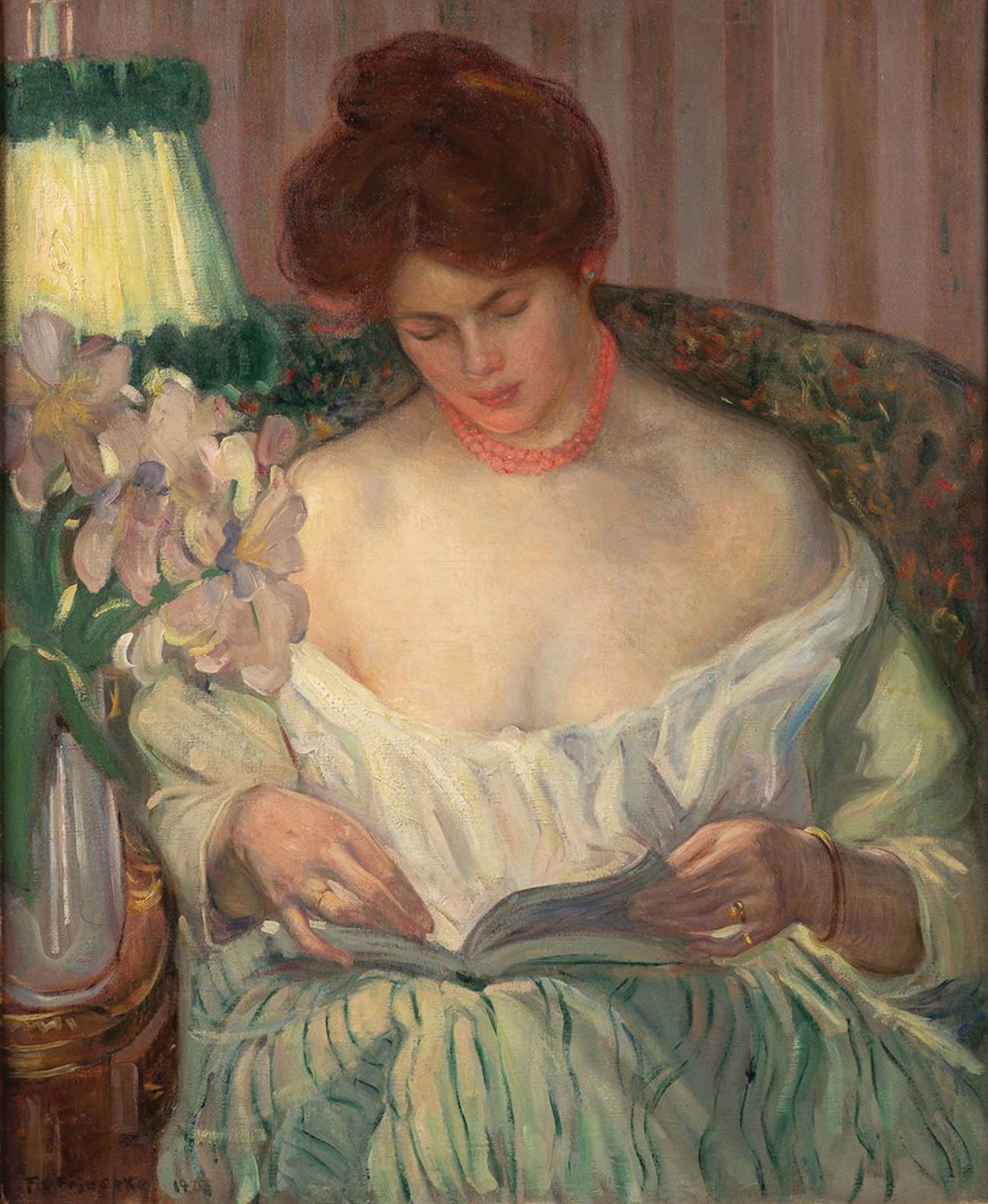
Frederick Frieseke (American, 1874–1939), Femme lisant à côté d’une lampe (Woman Reading by a Lamp), signed and indistinctly dated, circa 1905, oil on French canvas, 32 x 26 inches. Exhibited, according to Frieseke’s notebook, p. 17, at the 1905 Salon de la Société Nationale des Beaux–Arts. Also exhibited the same year at the Art Institute of Chicago. Included in the Frederick Frieseke Catalogue Raisonne.
Q. What is the core mission or philosophy behind your gallery’s collection and exhibitions?
Our gallery focuses on works by major American artists from the nineteenth to mid-twentieth century, with a specialty in important Florida paintings. We also like bringing forgotten artists, who were once important, back to their former prominence. Additionally, we enjoy enhancing museums and private collections.
Q. How do you decide which artists or specific works to feature in your current and future exhibitions?
We only handle artists’ works which appeal to us, both historically and aesthetically. We also do not specialize in contemporary artwork, drawing the line at mid-20th century modern paintings, such as those by Orville Bulman (1904–1978). Although we appreciate some of contemporary art’s more beautiful examples, we feel the current market has more than enough participants. We offer our own niche of older paintings for people to enjoy.
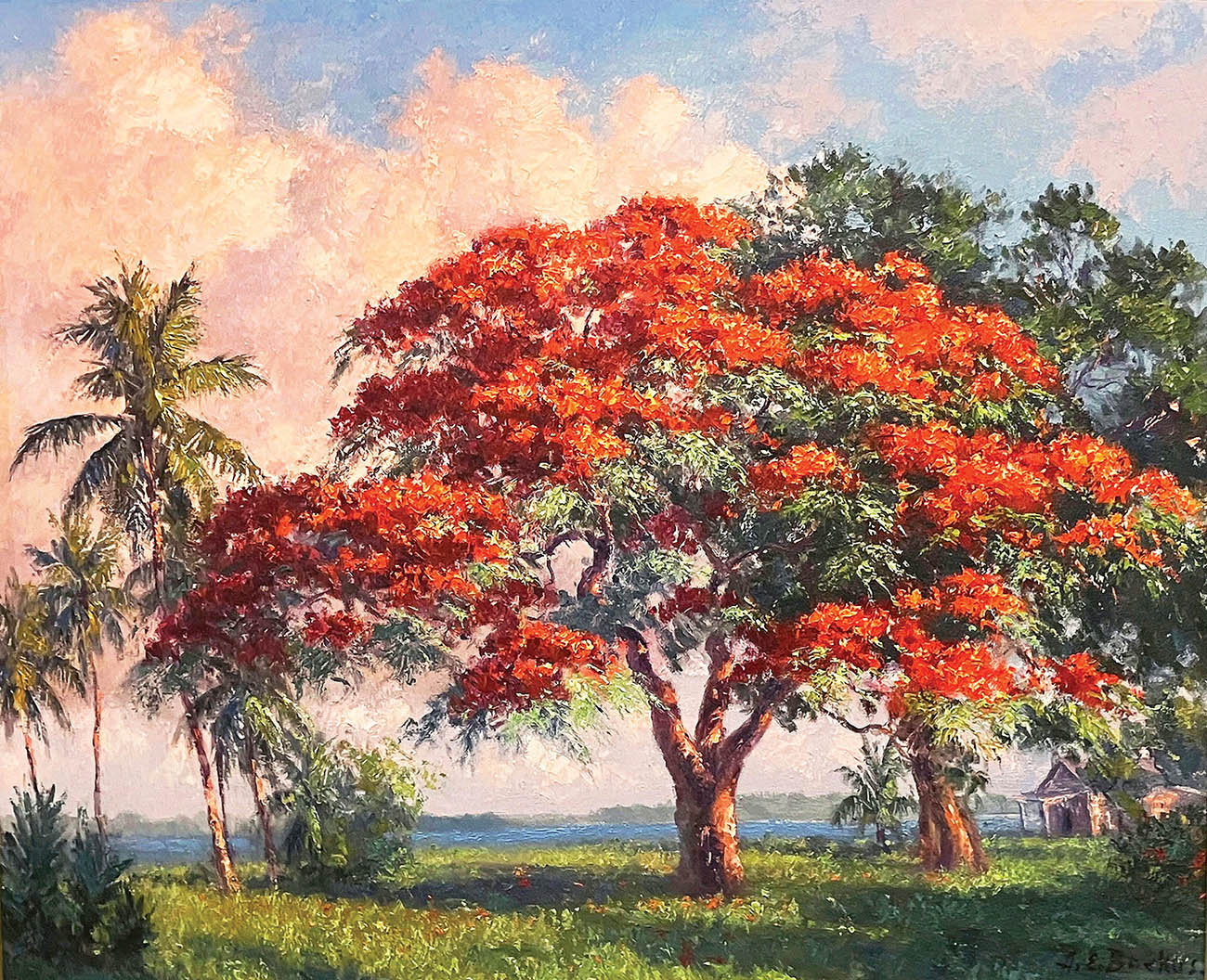
A. E. “Beanie” Backus (American, 1906–1990), Royal Poinciana on the Indian River, Florida, circa 1960, signed, oil on canvas, 20 x 24 inches.
Q. Can you share a memorable story about rediscovering an artist or artwork that had been forgotten or underappreciated?
Of course, Laura Woodward (1834–1926) comes to mind. Many years ago we discovered her works of tropical jungles and admired them; only to find out they were actually of early Palm Beach, before any mansions or condos. We had never heard of her at that time, but what a thrill to realize the history of this once forgotten woman artist of the Hudson River School, who came to Florida in the nineteenth century, and influenced Flagler in developing Palm Beach as a resort! Since then, my award-winning biography of Woodward resulted in an acclaimed PBS documentary, as well as many publications and exhibitions featuring her work—for instance, her important Ann Norton Sculpture Gardens retrospective in 2018.

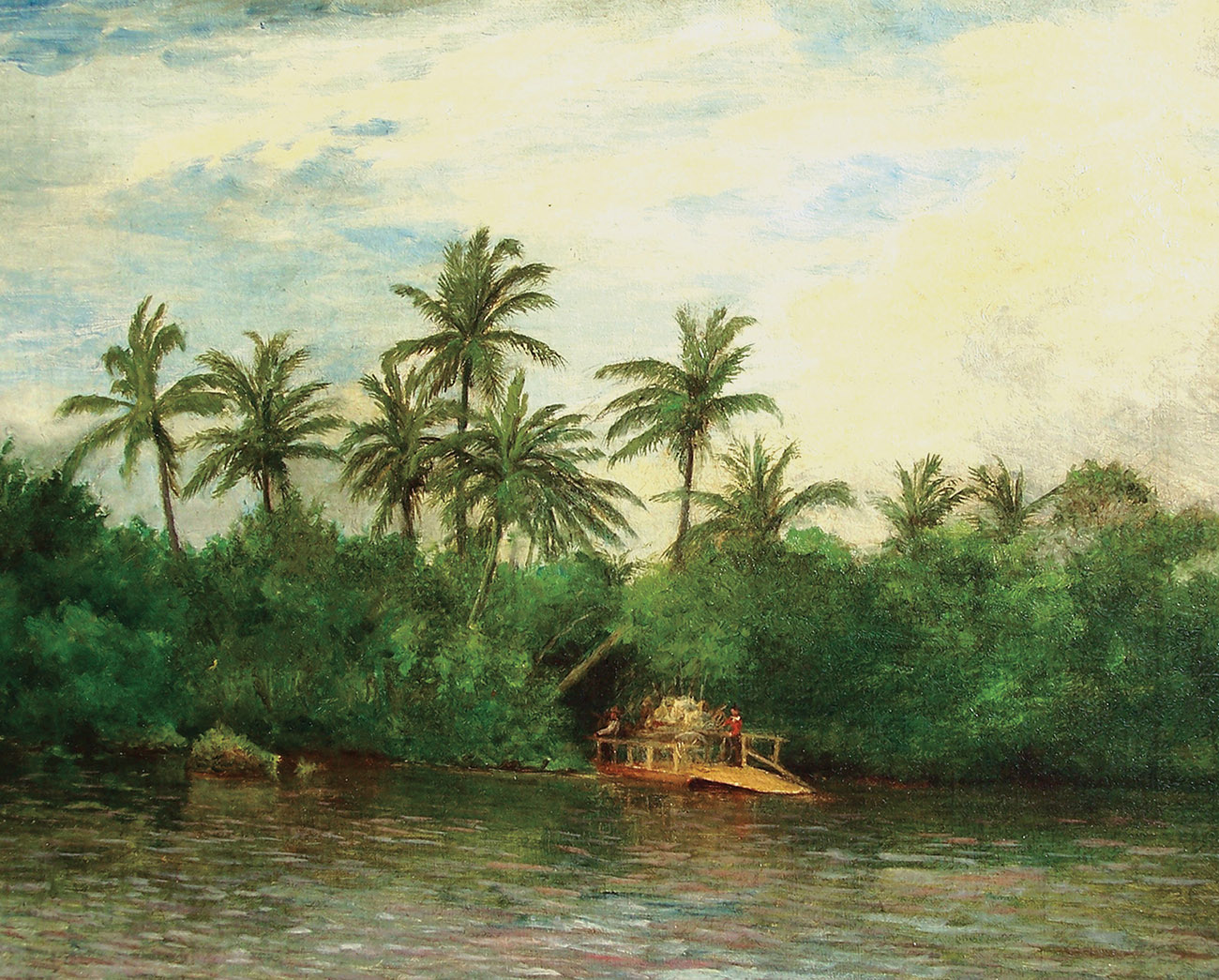
Laura Woodward, Fort Dallas, Miami, Florida, oil on canvas, 16 x 20 inches, ca. 1895, inscribed on reverse, Laura Woodward Artist, Fort Dallas, Amy Bennett [Woodward’s caregiver]. Also inscribed on stretcher: “Ft Dallas Miami, Laura Woodward Artist, From Amy Bennett with Love.” In 1895 Laura Woodward visited Julia Tuttle at Fort Dallas, where the Miami River converges with Biscayne Bay. From that visit, Woodward painted Fort Dallas, Miami.
Q. You’ve written and published several books on art and artists — how do writing and curating inform each other in your work?
The more we’re armed with knowledge, the better we can choose the paintings for our inventory.
Q. What advice would you give to emerging collectors interested in early American art or Florida-related works?
We advise them to buy what they love but quality should be foremost. It’s that simple.

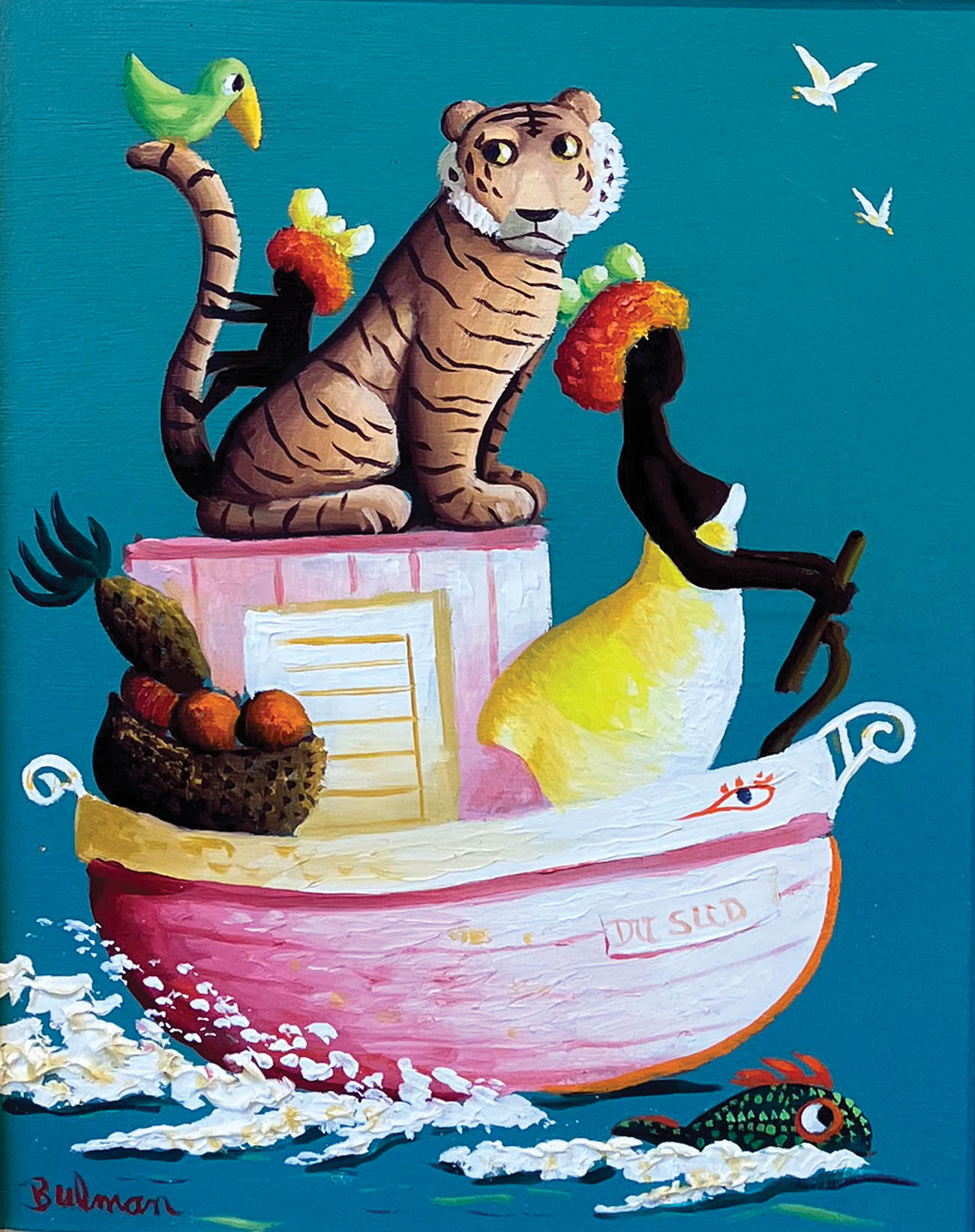
Orville Bulman (American, 1904–1978), Du Sud, signed, also signed on reverse and dated 1976, oil on board, 10 x 8 inches. Original Bulman frame. Provenance: Private collection, Manalapan, Florida.
Q. How do you build relationships with private collectors and institutions, and what makes those partnerships meaningful?
We appreciate our clients immensely and try to show them in many ways, including flexibility with prices whenever possible. We have been blessed with collectors who have become friends, some for many years. They have continued to stick with us, probably because they appreciate Ed’s quirky sense of humor and my constant blushing from embarrassment. It means everything to know they still enjoy the paintings we provided, and still like us! As for museums, we love to work with them as well and we are thrilled that they seek us out.
Q. Are there any particular themes or trends in the current art market that excite you or influence how you approach exhibitions?
We will always exhibit what we personally enjoy, not what fads dictate. Nevertheless, we are hearing reports of people getting tired of just buying on trend any piece of junk. They are becoming more discriminating, which makes us happy. The market, we sense, is changing, and turning again more toward traditional art. I’ve felt that the art market reflects society; i.e. ugly-chic is a major part of pop culture, and it may appeal to some who disdain fine, nineteenth and early twentieth century art as “grandma taste.” But classic art is today’s treasure and tomorrow’s aesthetic. Hopefully, good taste will eventually win out. While we do not normally handle contemporary art, we are pleased that many talented artists today emulate past masters.
Q. Looking forward, are there artists, movements, or historical periods you’re especially excited to explore next?
We have been interested lately in American women surrealist painters, but anything that we come across in art history that moves us will be the next on the agenda.
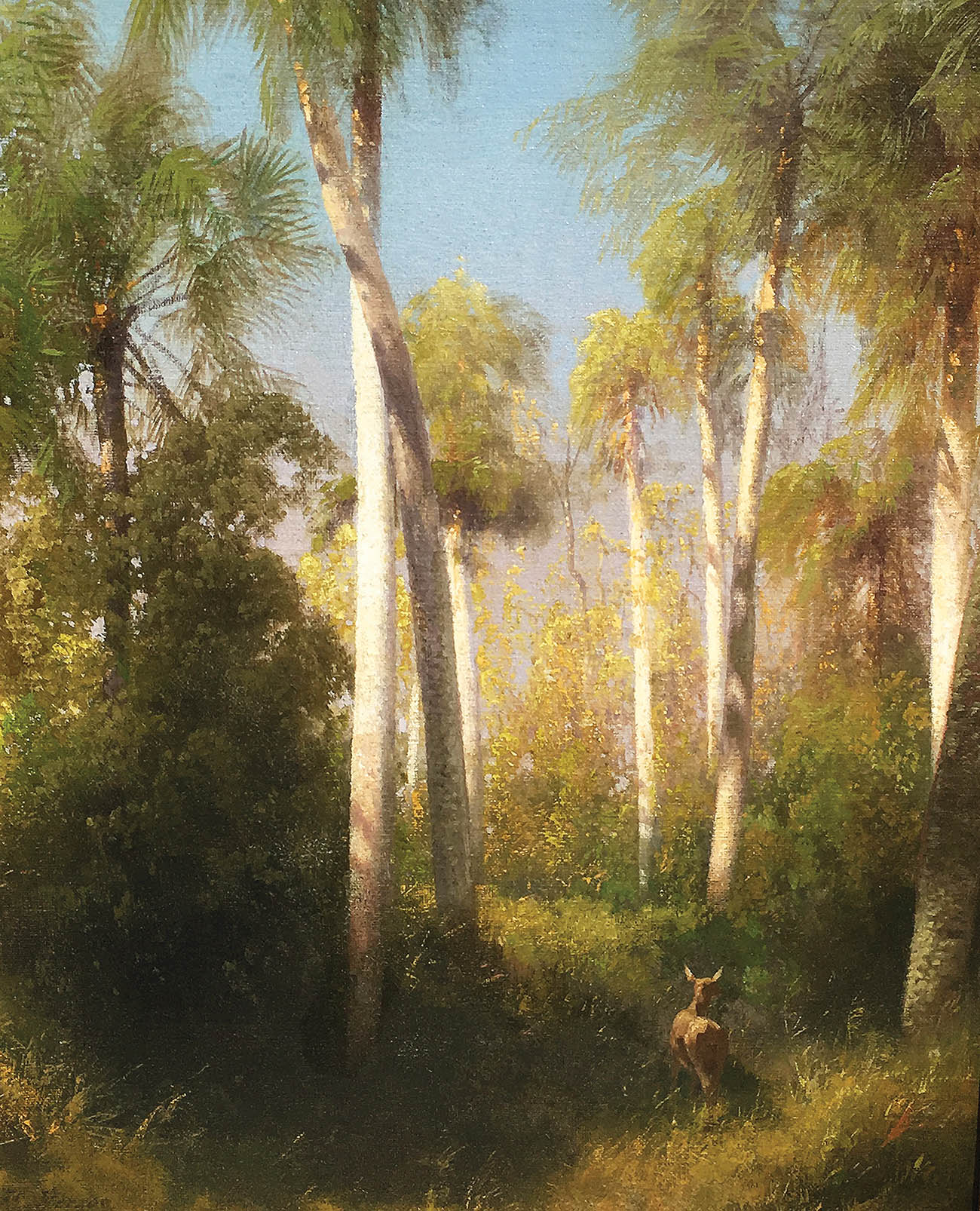
Hermann Herzog (American, 1832–1932), Deer in Woods (Florida), signed, oil on canvas.
Collection of Edward and Deborah Pollack
Q. Besides dealing in fine American art in general, your gallery is noted for important Florida and tropical paintings — what makes this genre uniquely compelling to you?
Simply because we live in this beautiful state and appreciate its nature. We are grateful for the important artists who have expertly shown the beauty of Florida, and we delight in not only dealing in their works, but collecting them as well. Additionally, we feel that we should honor those historical artists from the past who first helped form Palm Beach County visual arts culture.
Q. Deborah, your scholarship includes biographies of artists like Laura Woodward and Hermann Herzog — how does your research influence the way you present these artists in the gallery?
Ed deserves the credit for most of the scholarship pertaining to Hermann Herzog. His passion for and study of this artist’s work led to our book about him. We discovered he was the most important Florida landscape painter of the late nineteenth to early-twentieth century. We feel that collectors and museums should know more about the artists we present, and it enriches the entire experience if we can elucidate them. Just as we were fascinated to study and learn surprising facts about each one, we feel that our audience would be just as intrigued. And it turns out, they are.
Q. What gaps or misconceptions in American art history do you hope your books help address?
We try to correct inaccuracies that have been parroted for decades. For example, regarding Hermann Herzog, many galleries and museums have published incorrect data about the artist, but thankfully, since we informed them that our documentation refutes it, some have corrected their sites. We would also like to remind some Southern museums outside of our state that Florida artists were and are part of the South, and to include them in exhibitions and scholarly books.
Edward and Deborah Pollack Fine Art, LLC
205 Worth Avenue, Suite 202 (Second floor)
Palm Beach, FL 33480
561-655-1425
Eddeb1@aol.com
Visit Luxury Home Magazine of The Palm Beaches to learn about more Art Galleries in South Florida.


You May Also Like…
-

The Bigger Story is in the Smaller Details
A look inside the 2026 Kips Bay Decorator Show House New York, where bold design, personal details a...
15 October, 2026 -
Top Designers Project Spotlight: The Lewis Gallo Design Group
In a world increasingly defined by minimalist interiors, The Lewis Gallo Design Group is bringing ba...
09 October, 2026 -
Gallery Row: A Conversation with Elaine Davis – Sharing Art, Culture & Giving Back
Q+A with Elaine Davis: Sharing Art, Culture & Giving Back...
09 October, 2026