


09 Oct Gallery Row: A Conversation with Elaine Davis – Sharing Art, Culture & Giving Back
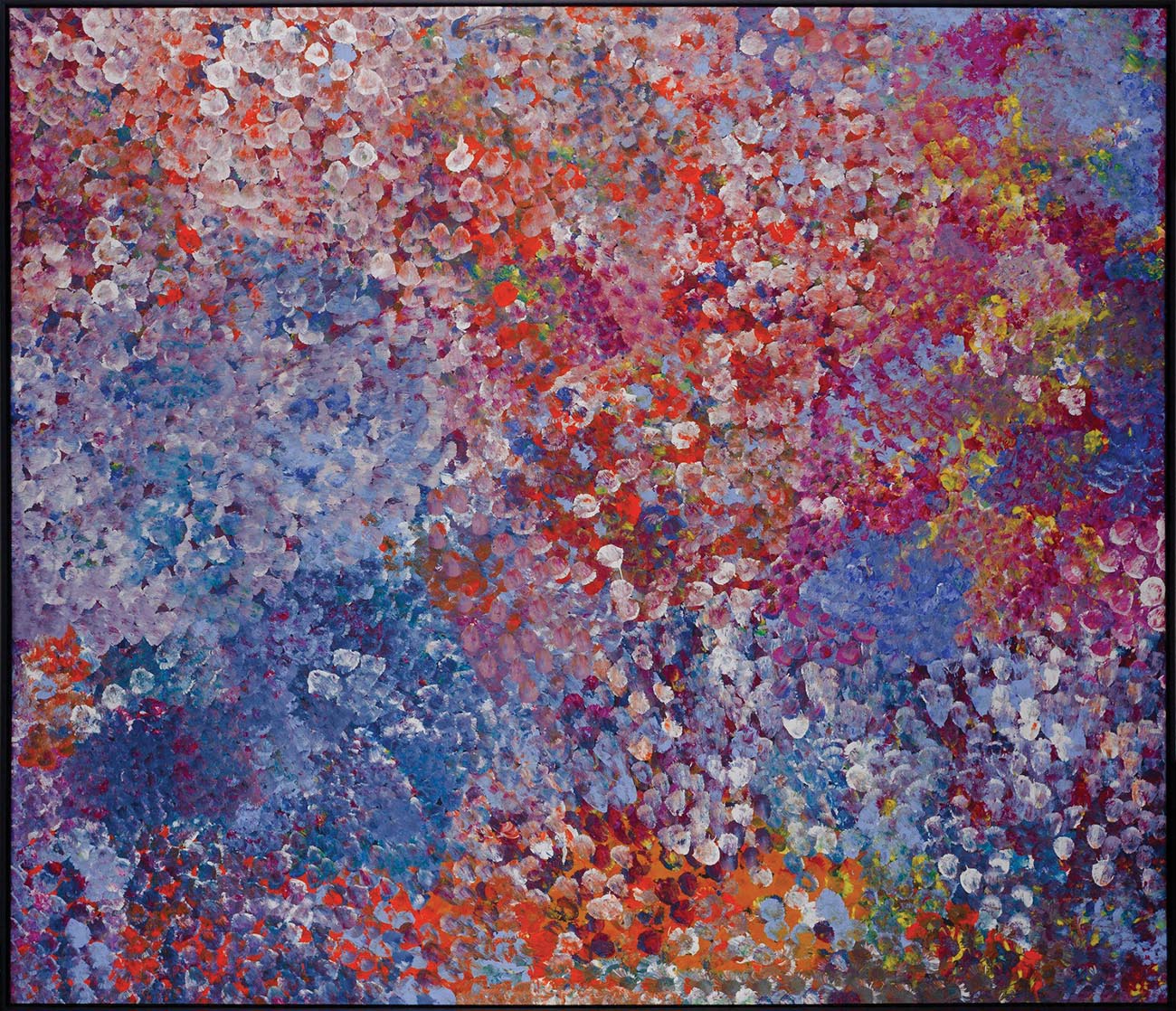
Born in England, Elaine Davis developed a deep appreciation for Australia after visiting family who had emigrated there years earlier. During a trip to Melbourne, she discovered Aboriginal art unlike anything she had seen before—vibrant, expressive, and remarkably diverse. Inspired, Elaine selected six paintings by six different artists to bring to the United States and share a broader view of this extraordinary art form. A portion of the proceeds from each sale will be donated to organizations supporting Aboriginal children in the Victoria region.

Q. What inspired Elaine Davis to become involved with Aboriginal art?
Elaine Davis is not an artist herself, but she has developed a deep appreciation for Aboriginal art and the stories, traditions and connection to country represented in each piece. Her passion is to share this extraordinary tribal art with others who appreciate its beauty, history and cultural significance.
Q. What does Elaine hope to offer through the art she shares?
Elaine hopes to introduce more people to the incredible work of Aboriginal artists and to create opportunities for those who genuinely love and appreciate this art to bring it into their own homes and collections. For her, each piece represents more than a beautiful work of art—it is connected to a culture and a story that deserves to be seen and appreciated.
Q. Why is giving back such an important part of her mission?
Elaine believes that sharing art can also create an opportunity to make a difference. Through the sale of the artwork, she is committed to giving back to children in Australia by donating funds toward a special community park inspired by the children’s own dreams and wishes.
Q. What does the park represent to Elaine?
The park is intended to be a place created for children—a space where they can play, explore, imagine and enjoy a community environment designed around what they dream of having. Elaine sees it as a way for the appreciation of Aboriginal art to extend beyond the collector and ultimately benefit the next generation.
Q.What does Elaine hope collectors understand when they purchase Aboriginal art?
Elaine hopes collectors see both the beauty of the artwork and the cultural stories behind it. Her goal is to connect people who love art with talented Aboriginal artists while helping create a positive and lasting impact for children in Australia. For Elaine, it is about sharing something she loves while giving something meaningful back.
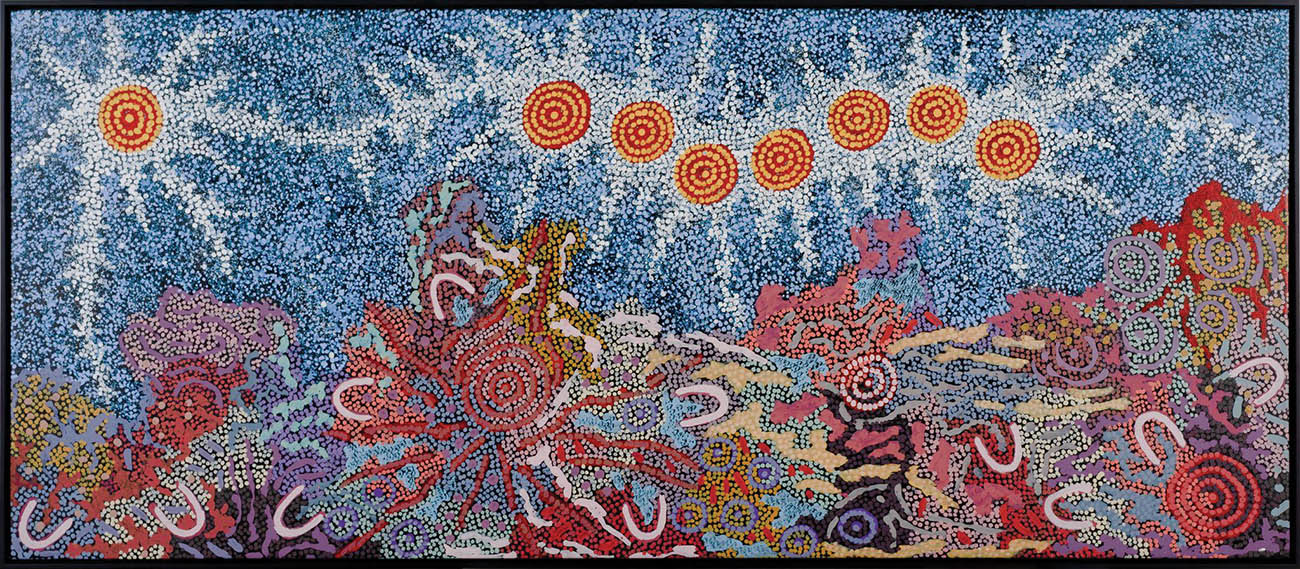
Gabriella Possum
Q. How did Gabriella Possum’s family shape her artistic journey?
Gabriella Possum was born in 1967 at Mount Allen in the Northern Territory and is the eldest daughter of one of Australia’s most renowned Aboriginal artists, Clifford Possum. She began painting at an early age under her father’s guidance, and the two collaborated on a number of important works. His influence played a formative role in her development as an artist.
Q. What stories are represented in Gabriella’s paintings?
Gabriella’s work draws upon Dreaming stories passed down through her paternal grandmother, Long Rose Nungala, as well as other senior women. Her subjects include Grandmother’s Dreaming, Seven Sisters Dreaming, Goanna, Bush Tucker Dreaming, My Father’s Country and Serpent Dreamings connected to her Anmatyerre heritage.
Q. How has Gabriella’s work developed throughout her career?
Gabriella’s paintings continue to explore the stories, landscapes and cultural knowledge inherited from her family and elders. Her work represents a powerful continuation of ancestral traditions while establishing her own distinctive artistic identity.
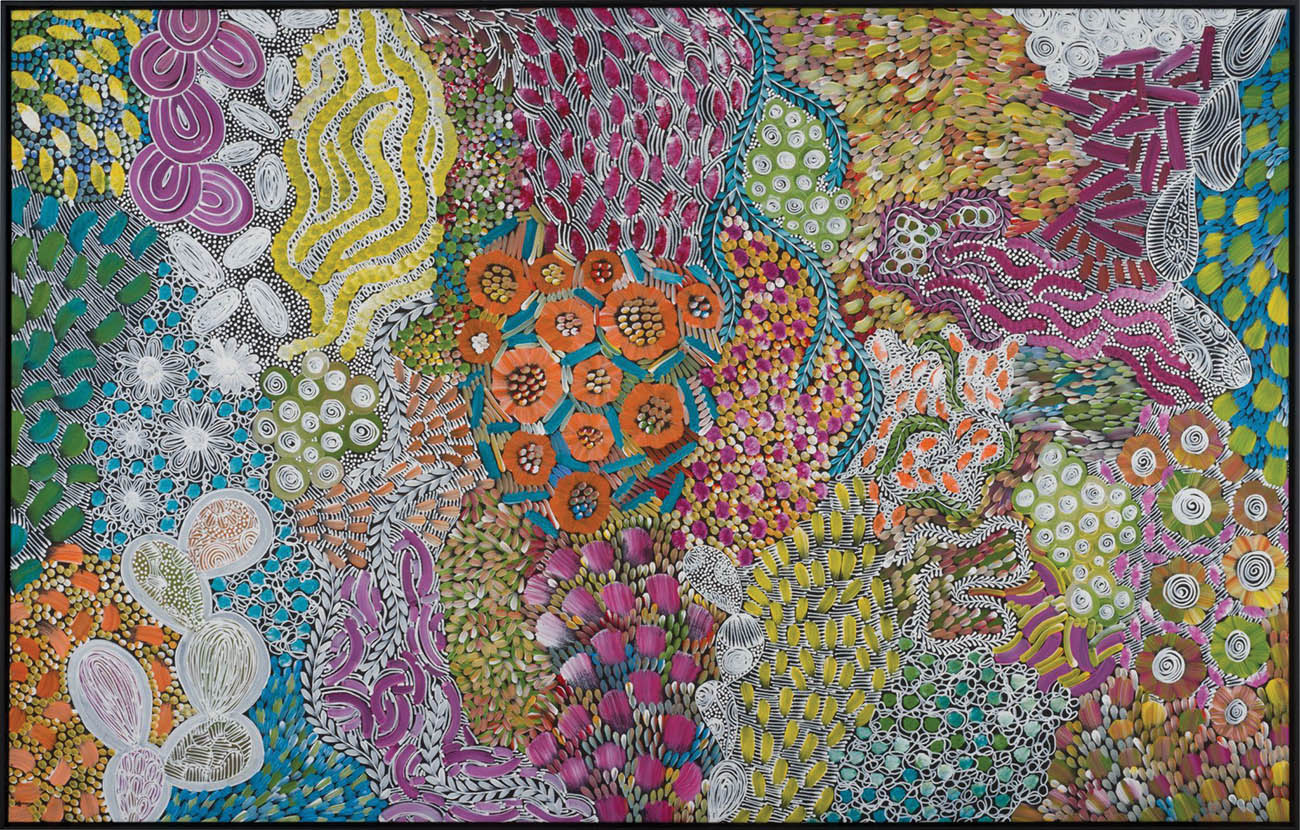
Karen Bird Ngale
Q. What is Karen Bird Ngale’s connection to country and culture?
Born in 1984, Karen is Anmatyerre and Ilkawerne, with her country located within the Utopia region of Central Australia. She is the daughter of Lindsay Bird, a senior elder for Ilkawerne country and a prominent artist from Utopia. Her strong connection to family, country and cultural traditions is central to her artistic practice.
Q. How has Karen learned the stories represented in her paintings?
Karen has been taught the traditional stories associated with women’s ceremonies alongside other younger women. This cultural knowledge includes understanding which stories and themes are appropriate for her to paint. Her work therefore reflects not only artistic expression but also knowledge entrusted to her through generations.
Q. What is one of Karen’s key subjects?
One of Karen’s principal subjects is Alpar, the Rat Tail plant seed story. Traditionally, women would collect the seeds, crush them and use them to make damper, or bread. Through this subject, Karen connects her artwork to traditional bush foods, women’s knowledge and the enduring relationship between people and country.
Polly Ngala
Q. How did Polly Ngala begin her artistic career?
Polly began her artistic career in 1975. She was closely connected to her sister Kathleen and the late Emily Kngwarreye, with the artists sharing the same country. Her early experiences working alongside members of her family helped shape her artistic practice and connection to country.
Q. What is the focus of Polly’s paintings?
Polly is known for depicting the Bush Plum and its relationship to her country. Her paintings explore the beauty and character of the landscape while reflecting the importance of the Bush Plum within her cultural and natural environment.
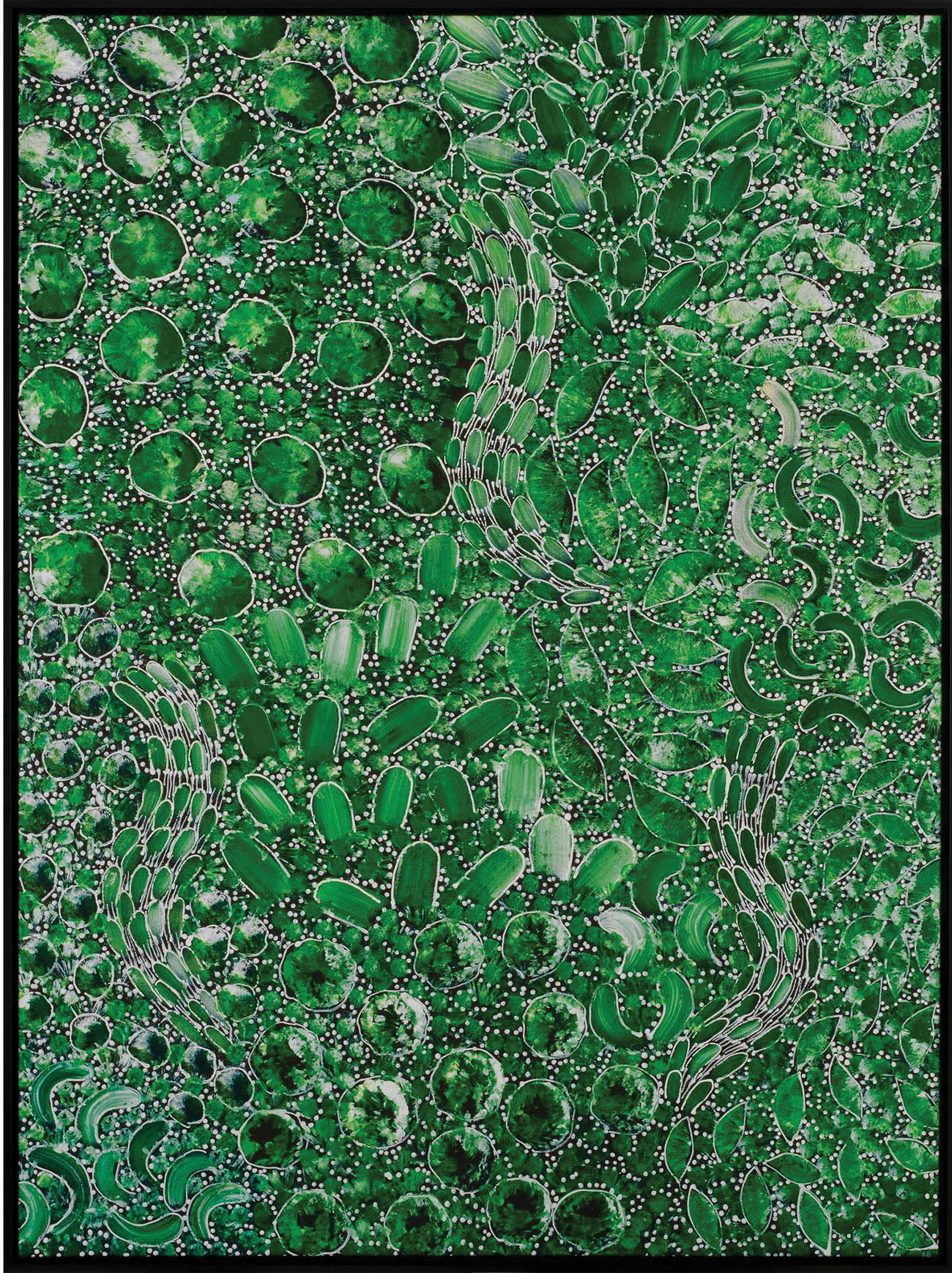
Rachael Nambula
Q. Where does Rachael Nambula’s artistic story begin?
Rachael Nambula was born around 1970 at Stirling Station, north of Ti Tree in Central Australia. She comes from an extraordinary artistic family. Her mother, Evelyn Pultara, was a celebrated artist and winner of the 2005 Telstra Award. Rachael’s family connections also include her great-aunt, the renowned Emily Kngwarreye, and her brother, Greeny Purvis. Growing up surrounded by artists and cultural knowledge has been a significant influence on Rachael’s own artistic journey.
Q. How does her family heritage influence her art?
Rachael’s family heritage provides a strong foundation for her work. Through painting, she continues the stories and traditions passed down through generations, drawing inspiration from the Dreamings associated with her ancestors and country.
Q. What stories does Rachael explore through her paintings?
Her work includes important Dreaming stories such as Bush Tucker, Pencil Yam, Emu Dreaming and Bush Yam. Each subject reflects her connection to country, culture and ancestral knowledge.
Q. What role does education play in Rachael’s life today?
In addition to her artistic practice, Rachael works as a teacher’s assistant at Neutral Junction Station Primary School in the Barrow Creek region. She is also continuing her studies at Bachelor College in Darwin, with the goal of becoming a qualified teacher specializing in Aboriginal Culture programs. Through both art and education, she is helping carry cultural knowledge forward to future generations.
Represented by Elaine Davis
954-560-9642 | ElaineMyHome@gmail.com

Visit Luxury Home Magazine of The Palm Beaches to learn about more Art Galleries in South Florida.



You May Also Like…
-

Top Designers Project Spotlight: The Lewis Gallo Design Group
In a world increasingly defined by minimalist interiors, The Lewis Gallo Design Group is bringing ba...
09 October, 2026 -
Gallery Row: A Conversation with Elaine Davis – Sharing Art, Culture & Giving Back
Q+A with Elaine Davis: Sharing Art, Culture & Giving Back...
09 October, 2026 -
Where the Wild Things Are
Where The Wild Things Are: From leopard to zebra, discover why timeless animal motifs continue to br...
02 October, 2026